How to Choose the Right Dune Buggy in Dubai
Understanding the Terrain and Your Experience Level
Dubai's desert landscape is unlike any other driving environment. The sand is soft, the dunes shift constantly, and the heat puts serious stress on both the machine and the driver. Before you look at any buggy, you need to be honest about your own off-road experience. A first-timer has very different needs from someone who has spent weekends tackling desert trails. The wrong choice can turn a thrilling ride into a frustrating struggle with the controls, or worse, a safety risk. Start by asking yourself how comfortable you are with controlling a vehicle on loose sand and steep slopes. If you are new to this, a simpler machine with automatic transmission and limited power will let you learn the feel of the sand without fighting the vehicle.
For those with some experience, the range opens up. You can consider buggies with manual shifting and higher horsepower, which give you more control over the vehicle's behaviour on challenging dune slopes. The key is matching the buggy's capabilities to your own skill level. Overestimating your ability is a common mistake that leads to getting stuck, overheating the engine, or losing control on a steep descent. Take the time to assess your driving background realistically.
Engine Cooling and Heat Management
Dubai's summer temperatures can push past 45 degrees Celsius. An engine that runs hot in normal conditions will struggle even more when it is climbing soft sand dunes at low speeds. Engine cooling is a critical factor in choosing a dune buggy dubai. Look for buggies that have been modified or designed specifically for hot climates. Many standard off-road vehicles come with cooling systems built for milder environments, and they can overheat quickly when the ambient temperature is extreme and the engine is under constant load.
Ask about the type of cooling system the buggy uses. Some rely on a large radiator with a high-capacity fan, while others use an oil cooler in addition to the standard radiator setup. The most reliable options for desert use have oversized radiators and sometimes additional cooling fans that activate automatically when the temperature climbs. It is also worth checking if the buggy has a temperature gauge inside the cockpit. Being able to monitor the engine temperature as you drive lets you back off before things get critical. If the buggy you are considering lacks a gauge, you are driving blind in conditions that can quickly damage the engine.
What to Watch for During a Test Ride
If possible, take the buggy for a short run on sand before committing. Pay attention to how the engine sounds when you are climbing a slope. A laboured sound that does not recover quickly could indicate an underpowered or poorly cooled engine. Also notice how the buggy handles when you stop on a dune crest. Does the engine temperature rise rapidly while stationary? That is a sign that the cooling system may not be adequate for prolonged use in the desert. A well-cooled buggy can sit idling on a dune without the needle climbing into the red zone.
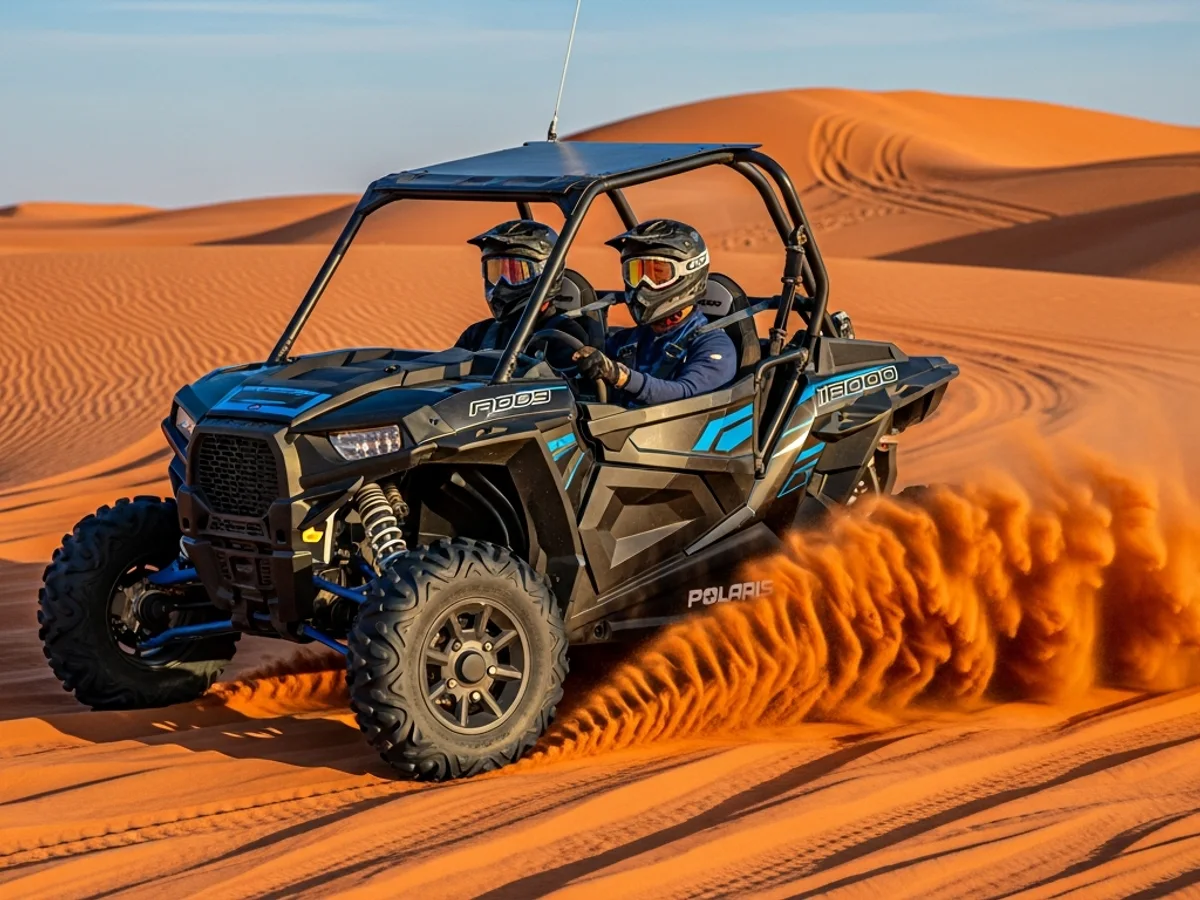
Roll Cage and Safety Harness
A dune buggy's safety structure is not something to take for granted. The roll cage is the most important protective element if the buggy tips over. On steep dune slopes, especially when you are driving across the face of a dune rather than straight up or down, the risk of a rollover is real. The roll cage should be made of welded steel tubing, not bolted together. Bolted joints can fail under impact, while a welded cage is much stronger. Check that the cage extends well above the occupants' heads and has cross-bracing behind the seats to prevent the cage from collapsing in a roll.
The safety harness is equally important. A standard lap belt will not keep you securely in place if the buggy tips. Look for a four-point or five-point harness that holds you firmly in the seat. The straps should be wide enough to distribute force without digging into your shoulders. Adjustable harnesses are better because they fit different body sizes properly. A loose harness can allow you to slide sideways during a roll, which defeats the purpose of the roll cage. Also check the condition of the straps. Faded, frayed, or stiff webbing may have lost its strength and should be replaced.
Sand Tyres and Traction
Tyres are the only contact your buggy has with the sand, and standard off-road tyres are not all the same. Sand tyres are wider than regular off-road tyres and have a different tread pattern. They are designed to float on top of the soft sand rather than dig into it. A tyre with aggressive mud treads will dig into the dune and bog the buggy down. Look for tyres that are at least 25 to 30 centimetres wide, with a paddle-like tread or a very shallow, open pattern. Some sand tyres have a smooth centre section with small ribs on the edges, which helps them glide over the sand while still providing grip on slopes.
Air pressure also matters. For sand driving, you typically run lower tyre pressure than on hard ground. Lower pressure increases the tyre's footprint and improves flotation. But too low a pressure can cause the tyre to come off the rim during sharp turns. A good sand tyre setup will have a pressure recommendation for the specific buggy and sand conditions. If the buggy you are looking at has standard off-road tyres, ask if they can be swapped for proper sand tyres. Using the wrong tyres will make even a powerful buggy feel sluggish and prone to getting stuck.

Off-Road Trail Navigation and Controls
Driving in the dunes is not like following a marked road. You need to read the terrain constantly and adjust your line based on the shape of the dunes. A buggy with responsive steering and a short turning radius is easier to handle when you need to change direction quickly on a dune slope. Look for a steering system that feels direct and has minimal play. Rack-and-pinion steering or a well-maintained chain-and-cable system gives you precise control. Slop in the steering makes it hard to correct your line when you are cresting a dune and cannot see what is on the other side.
Pedal placement also matters. The pedals should be positioned so you can reach them comfortably without stretching, and the brake pedal should be wide enough to use easily even when your foot is bouncing over rough terrain. Some buggies have a handbrake lever, which can be useful for holding position on a steep slope while you look around. Test the brake feel before you drive. If the brake pedal is too stiff or too soft, it will be difficult to modulate the braking force on loose sand, where sudden braking can cause the buggy to slide or tip.
Rental Options and What to Look For
If you are renting a dune buggy dubai rather than buying one, the process is slightly different. Rental companies typically maintain a fleet of buggies, and the condition of each individual machine can vary. Ask to see the buggy you will be driving before you pay. Check the general condition: look for rust, dents, or signs of poor maintenance. A buggy that is covered in sand and dust is normal, but one that has visible oil leaks or cracked body panels may have been neglected. Also ask about the rental company's recovery policy. If the buggy breaks down or gets stuck in the desert, do they come to retrieve you, and is there an extra charge? Knowing this upfront avoids surprises.
One local option is Dune Buggy & Quad Biking Dubai. Many rental businesses also offer guided tours, which can be a good choice for beginners because the guides know the terrain and can help you avoid dangerous areas. Whether you rent or buy, always confirm the safety equipment included. A helmet is standard, but goggles, gloves, and a neck brace may not be. If you are driving in a group, make sure everyone has the same level of protection. Desert driving is exhilarating, but the heat and the terrain demand respect.

Final Checks Before You Drive
Before you head out, go through a quick pre-drive checklist. Check the tyre pressure and look for any cuts or bulges in the rubber. Test the steering and brakes while stationary. Make sure the safety harness adjusts snugly and the roll cage shows no cracks or loose bolts. Confirm that the engine cooling system is working by letting the buggy run for a few minutes while stationary and watching the temperature gauge. If the buggy does not have a gauge, ask the rental operator or seller how they verify the cooling system is functional. A quick visual check of the radiator for debris or damage can catch problems before they become serious. Finally, carry plenty of water and let someone know your planned route and return time. The desert is vast, and even a short ride can become an ordeal if something goes wrong.
For more information, you can contact Dune Buggy & Quad Biking Dubai at Nakheel Mall Palm Jumeirah - Nakhlat Jumeira - Dubai - United Arab Emirates, phone +971 50 496 8087.
Dune Buggy & Quad Biking Dubai is also on Instagram.